Peter Ojiambo | Entomology and Plant Pathology
- Combining ability and heterosis in partial resistance to gray leaf spot in elite maize ( Zea mays L.) genotypes, Crop Science (2026, January 1)
- Evaluation of A Weather-based Decision Support System in Scheduling Fungicide Applications to Control Cucurbit Downy Mildew, Plant Disease (2026, August 19)
- HiBASIL: Hierarchical Bayesian Source Inference and Localization for Spatial Epidemiology, bioRxiv (Cold Spring Harbor Laboratory) (2026, July 30)
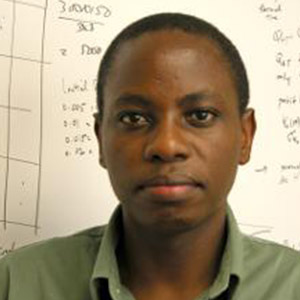
Peter Ojiambo
Professor and Director of International Programs.
Epidemiology and integrated management of plant diseases.
Department of Plant Pathology
239 Partners III, Campus Box 7567
Raleigh, NC 27695-7567
Telephone: (919) 513-2188 (Office),
Fax: (919) 513-0024,
Lab: (919) 515-0028,
Email : peter_ojiambo@ncsu.edu
Education
Ph.D. (Plant Pathology), University of Georgia, Athens, GA, 2004
M.Sc. (Plant Pathology), University of Nairobi, Kenya, 1997
B.Sc. (Agriculture), First Class Honors, University of Nairobi, Kenya, 1994
Research
Program Overview:
My research interest encompasses botanical epidemiology and integrated management of plant diseases, with emphasis on understanding the basic biology and ecology of plant pathogens and the use of this information to develop disease management tools. Application of mathematical and statistical models and computer technology to describe the dynamics of plant diseases in space and time is an integral aspect of my research program whose primary goal is to develop management decisions based on risk assessment and prediction of outbreaks of epidemics. I am also exploring research that bridges botanical epidemiology and pathogen population genetics.
Effective disease management through disease prediction and risk assessment requires an understanding of the biology and ecology of plant pathogens. Basic research is routinely conducted to understand the effects of changing weather patterns, shifts in pathogen populations, host resistance, and changes in cropping practices on the appearance of new and resurgence of existing plant diseases. My lab employs mathematical, statistical and computer models to study these effects and their possible consequences on disease development in space and time. I take advantage of modern statistical and ecological techniques, advanced computer technology and large weather databases to develop and use prediction and risk assessment models as decision-making tools in the integrated management of plant diseases.
Ongoing research projects:
- Incorporating random effects in survival analysis of plant disease epidemics and developing sampling techniques for assessment of disease incidence
- Developing a risk assessment model for Stagonospora nodorum blotch in winter wheat
- Within-season risk assessment model for cucurbit downy mildew and validation of the downy mildew forecasting system (http://cdm.ipmpipe.org/).
- Population biology and ecology of downy mildew of cucurbits in the eastern United States.
- Impact of the soil population structure of members of Aspergillus section Favi on the efficacy of bio-control of aflatoxin in corn.
Current Graduate Students:
- Mary Lewis (MS) — Started Fall 2012. Project: Impact of the soil population structure of members of Aspergillus section Favi on the efficacy of bio-control of aflatoxin in corn.
- Katie Neufeld (PhD) — Started Fall 2012. Project: Development of a model for within-season fungicide application to control cucurbit downy mildew.
- Anna Thomas (PhD) — Started Fall 2011. Project: Population biology and ecology of P. cubensis(cucurbit downy mildew) in the eastern US.
- Lucky Mehra (PhD) — Started Spring 2011. Project: Predicting the infection risk of Stagonospora nodorum blotch in winter wheat.
Teaching
PP 790-004: Advances in Evolutionary Ecology & Population Biology (Alternate Spring semester).
PP 790: Epidemiology: Theory & Application (Fall semester).