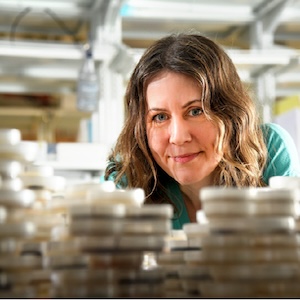
Christine Hawkes | Plant and Microbial Biology
- Crop performance traits predict the phyllosphere mycobiome, Fungal ecology (2026, July 22)
- Diverse root fungal endophytes mediate plant access to soil nutrients, bioRxiv (Cold Spring Harbor Laboratory) (2026, June 29)
- Niche constraints drive differences between mycorrhizal fungal guilds in future range shifts, bioRxiv (Cold Spring Harbor Laboratory) (2026, May 20)
- Long-term climate establishes functional legacies by altering microbial traits, The ISME Journal (2025, January 1)
- Tree Species Controls Over Nitrogen and Phosphorus Cycling in a Wet Tropical Forest, Bulletin of the Ecological Society of America (2025, January 6)
Christine Hawkes
William Neal Reynolds Distinguished Professor | Professor, Director of Microbiology Graduate Program | Microbiomes and Complex Microbial Communities Cluster
Bio
Hawkes is an ecologist studying the functions of plant and soil microbiomes. She received her bachelor’s degree in environmental studies from Bucknell University, and her Ph.D. in biology from the University of Pennsylvania. In her dissertation research, she addressed how soil microorganisms affected population viability of endangered plants. As a David H. Smith Postdoctoral Fellow, she studied the role of soil microbes in plant invasions and nitrogen cycling at the University of California, Berkeley. As a National Science Foundation (NSF) Postdoctoral Fellow, she addressed how root-associated microbes affect carbon cycling with warming temperatures. Hawkes currently leads a cross-disciplinary research program focused on (1) how plant microbiomes mediate plant stress phenotypes and (2) how drought and climate legacies affect plant and soil microbiomes.
Learn more at the Hawkes Lab website.
Education
Ph.D., Biology, University of Pennsylvania (2000)
B.A., Environmental Studies, Bucknell University (1993)